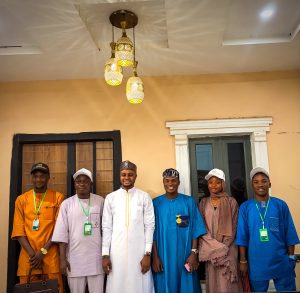
2027: Ebonyi LP Candidate Advices Opposition Parties To Unite Against APC

By Alex Odeh, Pan Afric Reporters
Dr. Ezeh Emmanuel Ezeh, Labour Party candidate for Abakaliki/Izzi Federal Constituency in the 2027 general elections, has warned that opposition parties in Nigeria risk electoral failure if they fail to embrace coalition politics and strategic cooperation ahead of the polls.
Ezeh, an Oxford-trained entrepreneur and 2023 Labour Party candidate, said the current structure of opposition politics remains too fragmented to effectively challenge an incumbent government.
In an interview with Journalists at Abakaliki, he argued that no single opposition party can defeat the ruling party alone, insisting that only a broad-based alliance anchored on discipline, restructuring, and strategic coordination can change the political equation in 2027.
According to him, opposition politics must evolve beyond sentiment and internal disorganisation into what he described as “hardcore strategic politics,” where parties operate with clearer ideological direction and competitive intelligence.
He noted that recent party primaries within some opposition platforms exposed weaknesses in internal processes and candidate selection, which he said continue to undermine credibility and public confidence.
Ezeh contrasted this with what he described as comparatively more structured processes within the ruling All Progressives Congress, stressing that opposition parties must urgently reform their internal systems if they hope to remain competitive.
He further advised that opposition parties should adopt a dual approach of internal competition and external cooperation, allowing them to strengthen their platforms while still forming alliances against the ruling party.
Quoting former. Ebonyi LP Candidate Sues For Unity Among Opposition Party To Win 2027 Election
Alex Odeh
Dr. Ezeh Emmanuel Ezeh, Labour Party candidate for Abakaliki/Izzi Federal Constituency in the 2027 general elections, has warned that opposition parties in Nigeria risk electoral failure if they fail to embrace coalition politics and strategic cooperation ahead of the polls.
Ezeh, an Oxford-trained entrepreneur and 2023 Labour Party candidate, said the current structure of opposition politics remains too fragmented to effectively challenge an incumbent government.
In an interview with Journalists at Abakaliki, he argued that no single opposition party can defeat the ruling party alone, insisting that only a broad-based alliance anchored on discipline, restructuring, and strategic coordination can change the political equation in 2027.
According to him, opposition politics must evolve beyond sentiment and internal disorganisation into what he described as “hardcore strategic politics,” where parties operate with clearer ideological direction and competitive intelligence.
He noted that recent party primaries within some opposition platforms exposed weaknesses in internal processes and candidate selection, which he said continue to undermine credibility and public confidence.
Ezeh contrasted this with what he described as comparatively more structured processes within the ruling All Progressives Congress, stressing that opposition parties must urgently reform their internal systems if they hope to remain competitive.
He further advised that opposition parties should adopt a dual approach of internal competition and external cooperation, allowing them to strengthen their platforms while still forming alliances against the ruling party.
Quoting former Labour Party presidential candidate Peter Obi, he reiterated that “the process must matter as much as the outcome,” adding that flawed internal procedures cannot be justified by electoral convenience.
Ezeh also referenced the political realities surrounding figures such as Rabiu Musa Kwankwaso, noting that individual political movements, no matter how strong, require broader coalitions to overcome the structural advantages of incumbency.
He commended the governance approach of Abia State Governor Alex Otti, describing it as an example of leadership that understands the importance of strategic alignment and functional political structures.
The Labour Party candidate maintained that the future of opposition politics lies in coalition building, consensus-driven candidate selection, and disciplined internal reforms.
He warned that failure to adapt to these realities could leave opposition parties permanently disadvantaged in future elections, adding that political actors must “compete like businesses but unite like a coalition” if they hope to unseat incumbents in 2027. Labour Party presidential candidate Peter Obi, he reiterated that “the process must matter as much as the outcome,” adding that flawed internal procedures cannot be justified by electoral convenience.
Ezeh also referenced the political realities surrounding figures such as Rabiu Musa Kwankwaso, noting that individual political movements, no matter how strong, require broader coalitions to overcome the structural advantages of incumbency.
He commended the governance approach of Abia State Governor Alex Otti, describing it as an example of leadership that understands the importance of strategic alignment and functional political structures.
The Labour Party candidate maintained that the future of opposition politics lies in coalition building, consensus-driven candidate selection, and disciplined internal reforms.
He warned that failure to adapt to these realities could leave opposition parties permanently disadvantaged in future elections, adding that political actors must “compete like businesses but unite like a coalition” if they hope to unseat incumbents in 2027.