REPS. NATIONAL PUBLIC HEARING: Etsu Nupe Intensifies Call for Constitutional Roles for Traditional Rulers as LG Autonomy, Special Seats for Women, State Police, Electoral Reforms and Others Top 87 Bills for Proposed Constitution Amendment

By Onwe Wisdom|Pan Afric Reporters, Abuja
Calls for a people-driven constitution reform heightened the House of Representatives national public hearing on the review of the 1999 Constitution in Abuja, with 87 amendment bills under consideration.
The issues at stake range from local government autonomy, state and community policing, judicial and electoral reforms, special legislative seats for women and persons with disabilities (PLWDs), to devolution of powers and strengthening of public and traditional institutions.
Traditional rulers whose agitation for a constitutional role was renewed and intensified in their presentation by clarified that the motive is not to hijack the function of elected leaders, but to serve as a bridge between the government and the governed, stressing that their demand was not to rival elected leaders but to strengthen governance at the grassroots.
The Etsu Nupe and Chairman of the Niger State Council of Traditional Rulers, Alhaji Yahaya Abubakar who spoke on behalf of the council said “I want to make it clear to all of the members, executive members, governors, chairmen, and everybody, that this institution is not here to usurp your authorities, no. We are here to collaborate, to complement you, so that you run this country much, much better. We don’t compete at all, no competition at all.
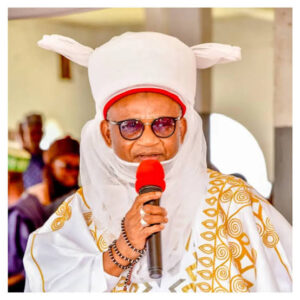
“We are here to complement and collaborate with all the programmes, all the policies that the government may bring. We mobilise our people, we encourage them, we make them understand because when we speak, our own mother tongue, they understand better than what I’m speaking now, English.
“You know, when a Yoruba calls his people and tells them what to do, they understand Yoruba. The same thing with the Igbo, if he calls his people and talks to them, they understand him. So that language, that barrier must be breached.”
The royal father who went down memory lane recalled before the amalgamation of the Northern and Southern protectorates and the Lagos Colony to form Nigeria in 1914, the various areas were a conglomeration of kingdoms, caliphates, chiefdoms and emirates, with various levels of traditional authorities as the basis for governance.
The Deputy Speaker and Chairman of the Constitution Review Committee, Benjamin Kalu, clarified that the bills being considered are still proposals before the National Assembly are still proposals capturing the needs and desires of the people and not yet laws.
He said: “Before us is a compendium of 87 proposed amendment bills, each a response to the felt needs and expressed desires of the Nigerian people. They are organized around the central pillars of a modern, functional, and just society.
“The items and amendment proposals being considered are not yet laws, but still proposals, suggestions and ideas that have emerged through one of the most inclusive and participatory exercises in Nigeria’s constitutional history.
“Importantly, these proposals do not simply represent the agenda of the legislature; instead, they are, first and foremost, the thought-out demands, hopes, and memoranda of the Nigerian people themselves, gathered through extensive regional dialogues and topically-focused public hearings held across the nation.
‘It is, therefore, essential that the process is not misconstrued. The constitutional amendment journey is designed to be transparent, participatory, and fair.
“Yet, let us also be clear: while today represents the final stage of direct public engagement in this constitutional review process, it is, by no means, the final day of work. Rather, it marks the transition to the next phase, a return to the deliberative chambers of the parliament, where all submissions will be critically sifted, refined, and improved upon in preparation for the momentous task of voting”.
House Speaker Abbas Tajudeen emphasized the urgency of reforms, particularly in ensuring equity and representation. “Today women hold less than five percent of seats in the National Assembly. That statistic is unacceptable for a country of our size and ambition,” he stated.
Argued that Nigeria cannot prosper by leaving half of its talent and energy on the sidelines, adding that a reform that is delayed is denied; said the review would pay attention to representation of under represented groups like women, youth and persons with disabilities in governance.
He maintained that the public hearing marked a significant moment in the nation’s democratic journey and legislative process as it crowns months of deliberate, nationwide engagement designed to ensure that Nigerians themselves shape the evolution of the supreme law.
President Tinubu, who was represented by the Secretary to the Government of the Federation, Senator George Akume, reiterated his commitment to the constitutional reform that would strengthen the institutions.
He described the process as a “golden opportunity” for Nigerians to advance democracy and nation-building. He urged them to actively participate in the historic opportunity to entrench good governance, inclusivity, and sustainable development.

President Tinubu commended the House for creating an inclusive platform to engage with the citizens, civil society, political parties, professional groups, and traditional institutions in the amendment process.
The Conference of Speakers of State Houses of Assembly, represented by the Speaker of the Bauchi State House of Assembly, Abubakar Suleiman, said Constitution amendment is about renewing trust and rebuilding confidence in the democratic institutions.
He added: “The Conference of Speakers is committed to playing its full role in this process. We will continue to ensure that the voices of states are heard and that the reforms agreed upon here are given the necessary ratification across our 36 Assemblies”.
British Deputy High Commissioner to Nigeria Geo Liva said opening the doors of the constitutional amendment process for wider citizen input demonstrated a commitment to promoting democratic debate and accountability.
She said the huge turnout at the public hearing underscored the healthy and considerable desire there is in Nigeria for participatory democracy, assuring that the government of the United Kingdom is committed to its modest support for the process.
Liva said: “Our support is rooted in a shared belief that inclusive governance built on public participation, built on the need for fostering public trust, is a cornerstone of a resilient democracy.
“As your partner, the UK understands that any constitutional reform process is a complex undertaking. It needs thoughtful deliberation, the building of sufficient consensus and the creation of shared visions for future arrangements.”
The Head of the European Union delegation to Nigeria and ECOWAS, Ambassador Gautier Mignot, said the amendments posed some logistical challenges, but shows how vibrant Nigeria’s democracy is, “even more vibrant than we would think”.
He said: “For any democracy, constitutional reviews are opportunities to strengthen democracy and adjust it to the evolutions of society, technologies and the global environment.
“As international partners, the EU is following very closely this process. Of course, we are very careful not to meddle into the sovereign choices of the people. But we are here to provide technical assistance, expertise, support for consultations with stakeholders.”
Representatives of women group also reiterated their demand for increased representation in the parliament and executive councils across the tiers to further engender gender inclusion and balance in government appointment.

The President of Network of Women with Disabilities, Lois Auta, lamented the low representation of women in governance in the country.
She said: “As it is right now, we are at a zero level of participation in governance. We are excluded and underrepresented in every sector.” Citing the example of Kenya.