NELFUND: Renewed Hope of Access to Higher Education in Nigeria
By Prof. MK Othman
Hitherto, the journey toward higher education in this country has long been a test of endurance and sacrifice, especially for many families, whose dream of a university degree often comes at a steep price, forcing parents to make immense financial sacrifices. Still, some had to give up any form of education beyond primary school. Long before the introduction of structured financial support systems, many bright young minds were held back by the harsh realities of economic hardship, where a lack of funds often meant deferring dreams or even leaving education altogether.
Looking back to the period from the late 1980s through the early 2000s—and even into the last decade, we see a clear picture of financial struggle among many university candidates and their parents. For those already in school, there were challenges with tuition fees, accommodation costs, feeding, and learning materials, all while inflation and currency fluctuations drove these costs higher. In many cases, parents found themselves selling property, depleting savings, or borrowing money at exorbitant interest rates just to keep their children in school.
Others stood helplessly as their children had to defer admission or drop out entirely due to the financial strain. Overall, access to university education was more often determined by financial capacity than by merit.
I recall that throughout the economically turbulent 1990s, many students at public universities faced rising costs. This was despite government subsidies. The reduction of these subsidies and the rising cost of living increased the burden. Many students took on part-time jobs, private tutoring, or entrepreneurial ventures just to make ends meet. While these efforts showcased resilience, they came at the expense of academic progress and often led to longer graduations or poor performance.
To address this critical barrier to equitable access, the Nigerian government introduced the Students’ Loans (Access to Higher Education) Act in June 2023, marking a decisive move to prioritize financial inclusion for students.
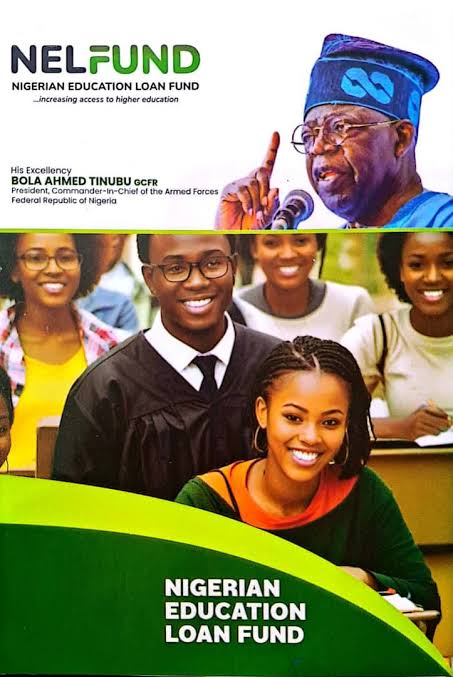
By launching NELFUND, this landmark program directly addresses longstanding financial impediments, enabling more Nigerians to pursue higher education based on merit rather than economic status. NELFUND is a cornerstone of the federal administration’s youth development strategy, underlining the belief that affordable education is essential for national progress.
A pivotal moment in that journey occurred on April 8, 2026, when Mr. Akintunde Sawyer, the Managing Director and Chief Executive Officer of NELFUND, visited the Federal University of Dutsin-Ma in Katsina State. His visit was part of a nationwide outreach campaign to engage directly with students, administrators, and other stakeholders about the implementation of the government’s student loan scheme. During the visit, Mr. Sawyer announced that the Fund had disbursed over ₦240 billion in institutional fees and living stipends to more than 1.3 million students across public tertiary institutions in Nigeria since the program began in 2024. This means that, on average, each beneficiary received approximately ₦184,615 to cover their educational costs. This milestone not only reflects the program’s grand potential but also illustrates the tangible changes it has brought to tertiary education in Nigeria.
As I reflected on the NELFUND program, I shared my insights as someone who has been part of Nigeria’s university system since 1989. Over the years, I have witnessed the ebb and flow of educational policies and their impacts on students’ lives.
During Mr. Sawyer’s visit, I emphasized the significance of NELFUND, stating: ‘As someone who has been part of this system for a long time, I can confidently say that NELFUND is making a real difference.’
This sentiment resonates with many students and administrators in our academic community. They see the positive shifts NELFUND is creating, birthing a new era and renewed hope for access to higher education.
The differences between the past and present are stark. In the past, students relied mostly on family financial help or on sporadic, unreliable, and inadequate scholarships, and some were forced to interrupt their studies due to unpaid fees.
Financial pressures intensified during economic downturns, leaving many undergraduates caught in a cycle of suspended study. Some had their dreams cut short. In stark contrast, the current structure of the student loan scheme provides reliable support, enabling students to continue their academic journeys without fear of financial setbacks; hence, they can pursue their dreams with renewed focus, unburdened by the anxieties that once held them back. But the benefits of NELFUND extend beyond students; they also positively impact universities themselves, which have long faced financial instability that impeded academic activities, research, and infrastructure development. The assurance of timely loan payments fosters financial stability across public tertiary institutions, making administrative tasks more efficient and allowing universities to focus on their primary mission of teaching, research, and community service.
At the forefront of this transformative initiative is Mr. Akintunde Sawyer, whose exceptional leadership has earned praise and whose robust background in finance and development administration has infused the Fund’s management with professionalism, transparency, and empathy. His initiatives, particularly his engagement with students during outreach visits, embody a commitment to making NELFUND a people-centered organization that builds trust and fosters confidence nationwide.
By streamlining the application process and emphasizing accountability, he has positioned NELFUND as a credible and impactful institution. Supported by a team of seasoned professionals alongside Mr. Sawyer, NELFUND is currently operated with efficiency and integrity, adhering to international best practices in educational financing. Their diligent work, especially through robust verification systems and transparent disbursement mechanisms, has set a new standard for accountability in Nigeria’s public sector.
Indeed, NELFUND’s goal aligns seamlessly with the broader initiatives of the President Tinubu administration, which recognizes that the youth represent a significant proportion of the nation’s population and, thus, introduces policies to empower young people through education, entrepreneurial opportunities, and digital inclusion. I can testify that this government is ardently building a framework to harness young talent and potential through several Renewed Hope programs in skills acquisition and digital training platforms, as part of a holistic approach to creating a knowledge-driven, globally competitive economy. In a broader context, investing in education is synonymous with investing in the future, as all nations that have experienced rapid socioeconomic progress have prioritized human capital development. NELFUND does not merely alleviate financial burdens in education; it strengthens Nigeria’s foundation for sustainable national growth, as an educated and empowered youthful population is essential for national productivity and social stability.
During our engagement at Federal University Dutsin-Ma, I articulated in one of my remarks, ‘Ultimately, we—the older generation—will one day fade into the background, so that young men and women can lead the nation forward. If we equip them with the right tools, we can ensure a bright and prosperous future for our nation…’
Moreover, NELFUND has bolstered public confidence in government policies, as parents who once felt daunted by the financial demands of higher education now find solace in a support system designed to help their children succeed academically. Students, empowered by this newfound confidence, can focus on their studies and personal growth, while public universities benefit from increased financial inflows that translate into a well-prepared, skilled workforce. What makes the initiative even more remarkable is its demonstration of how collaboration among government bodies, educational institutions, and the private sector can yield significant benefits for society.
The initiative illustrates that well-thought-out policies, when diligently and transparently implemented, can foster positive societal change.
As weNELFUND represents more than a funding solution, it is a strategic investment that breaks down financial barriers, opening higher education to all qualified Nigerians. By making education accessible, the government is empowering the next generation to build a prosperous future for Nigeria.
The central message is unambiguous: no Nigerian child should be denied higher education because of financial obstacles. Ultimately, NELFUND’s Managing Director’s visit to FUDMA in April 2026 marked an important chapter in this transformative narrative, encapsulating not only a policy in action but also a collective commitment to empowering Nigeria’s youth. As stakeholders come together to embrace this initiative, it’s clear we are forging a path toward educational excellence and a renewed societal spirit.
Ultimately, the fate of our future hinges on our young people, so any investment in their education today would open the doors to a more prosperous tomorrow. With strong leadership, strategic policy execution, and active collaboration across sectors, NELFUND shines as a beacon of hope—reshaping futures, fortifying institutions, and lighting the way toward a new era of a more inclusive and enlightened Nigeria.