Build Integrity into Your DNA, ICPC Tells South-South Development Commission
…urges newly inaugurated commission to institutionalise transparency and accountability from inception to prevent corruption
By Pan Afric Reporters
The Independent Corrupt Practices and Other Related Offences Commission (ICPC) has charged the newly inaugurated South-South Development Commission (SSDC) to build its operations on a solid foundation of integrity, transparency and accountability, warning that corruption thrives where institutions fail to establish strong internal controls from the outset.
The anti-corruption agency stressed that the SSDC has a rare opportunity to institutionalise preventive safeguards from its inception, rather than waiting to introduce reforms after corruption has become entrenched.
The position was contained in a press statement issued by the Independent Corrupt Practices and Other Related Offences Commission (ICPC) and signed by J. Okor Odey, Head, Media and Public Communications, ICPC, on August 1, 2026.
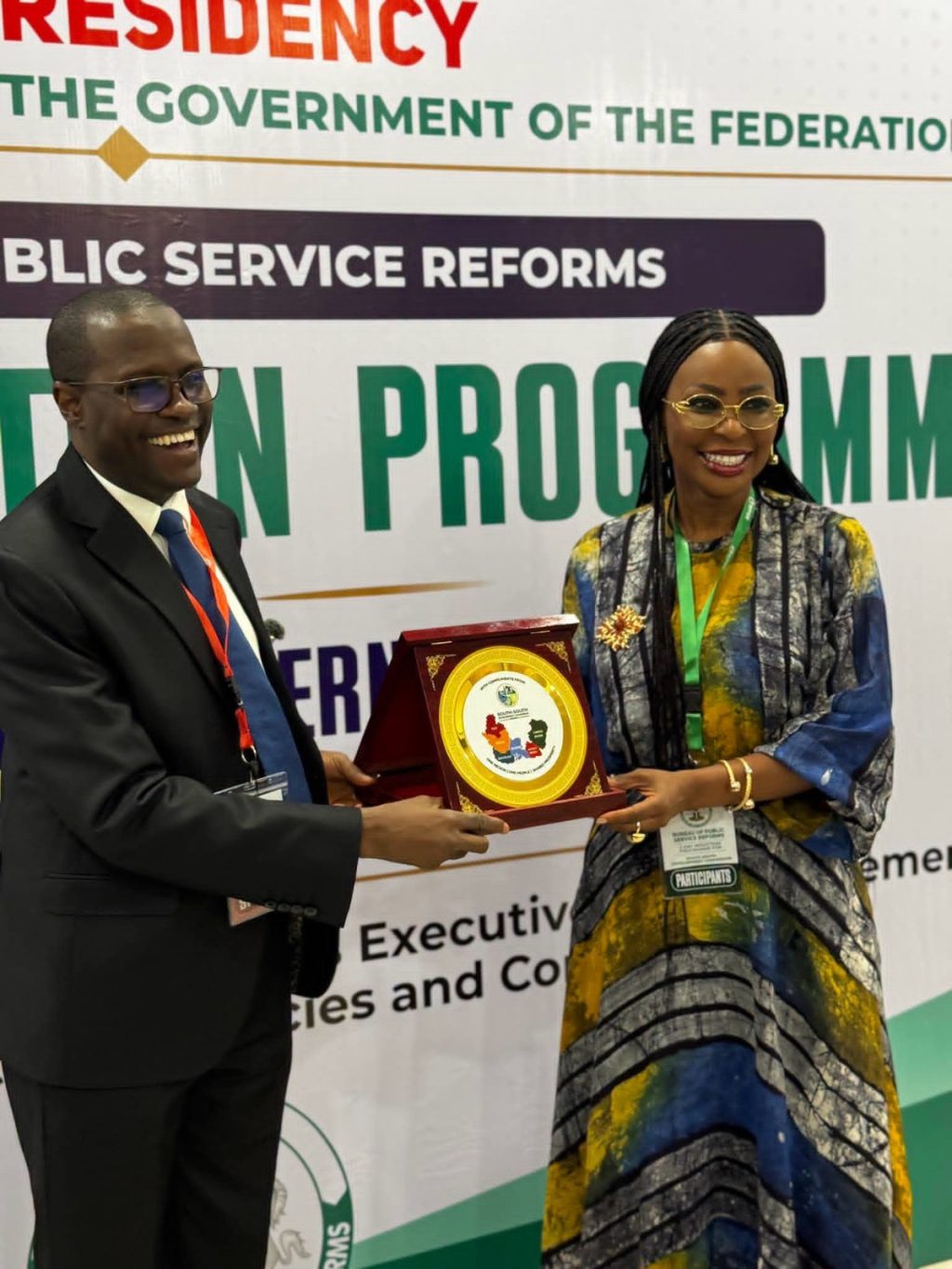
Speaking during the South-South Development Commission’s flagship induction programme in Abuja, the ICPC Chairman, Dr. Musa Adamu Aliyu, SAN, described the event as a generational opportunity for the Commission’s leadership to establish governance systems capable of preventing corruption before institutional weaknesses emerge.
According to him, institutions become vulnerable to corruption through weak oversight, ambiguous procedures and poor internal controls rather than through sudden acts of misconduct.
“Institutions do not become corrupt overnight. Corruption germinates from minor concessions, ambiguous boundaries, and frail internal controls. The institutions that endure are those that deliberately cultivate integrity as their foundational ethos,” Aliyu said.
The ICPC Chairman noted that unlike older public institutions struggling to reform entrenched systems, the SSDC has the advantage of starting with a clean slate that allows it to embed transparency and accountability into its operational framework from day one.
He anchored his presentation on the Commission’s statutory mandate of prevention, enforcement and public education under the Corrupt Practices and Other Related Offences Act, 2000, while emphasising that preventing corruption remains more effective than prosecuting offenders.
“No nation can prosecute its way out of corruption. Enduring success resides in prevention,” he stated.
During the induction, participants were taken through key principles of good governance, including accountability, transparency, integrity and stewardship, as well as the distinction between governance and management functions, which Aliyu described as a major source of institutional conflicts when blurred.
He also identified corruption risk areas common to development commissions, including procurement irregularities, project selection bias, financial mismanagement, human resource abuses, community engagement challenges and political interference.
Drawing from recent investigations by the ICPC, the Chairman cited the forfeiture of land earmarked for a 962-unit housing estate under the National Housing Fund Scheme after about ₦14 billion was allegedly expended without any completed building. He also referenced the recovery of nearly ₦942 million paid to 908 ghost workers uncovered through the Integrated Personnel and Payroll Information System (IPPIS).
To shield the SSDC from similar challenges, Aliyu unveiled several preventive tools available through the ICPC, including the establishment of Anti-Corruption and Transparency Units (ACTUs), Corruption Risk Assessments, Systems Study and Review mechanisms, and ethics and integrity education programmes.
He further proposed a five-point partnership framework between the ICPC and the SSDC centred on integrity diagnostics, functional ACTUs, continuous capacity building, compliance monitoring and proactive public engagement.
Aliyu concluded by stressing that the true measure of the South-South Development Commission’s success would not be the volume of projects executed or the size of its budget but the integrity with which public resources are managed.
“The ultimate barometer of the SSDC’s success will not be the magnitude of appropriated funds or the sheer tally of initiated projects, but the unimpeachable integrity with which public resources are stewarded, the luminous transparency of its decisions, and the enduring public confidence it engenders among the citizens of the South-South region,” he said.